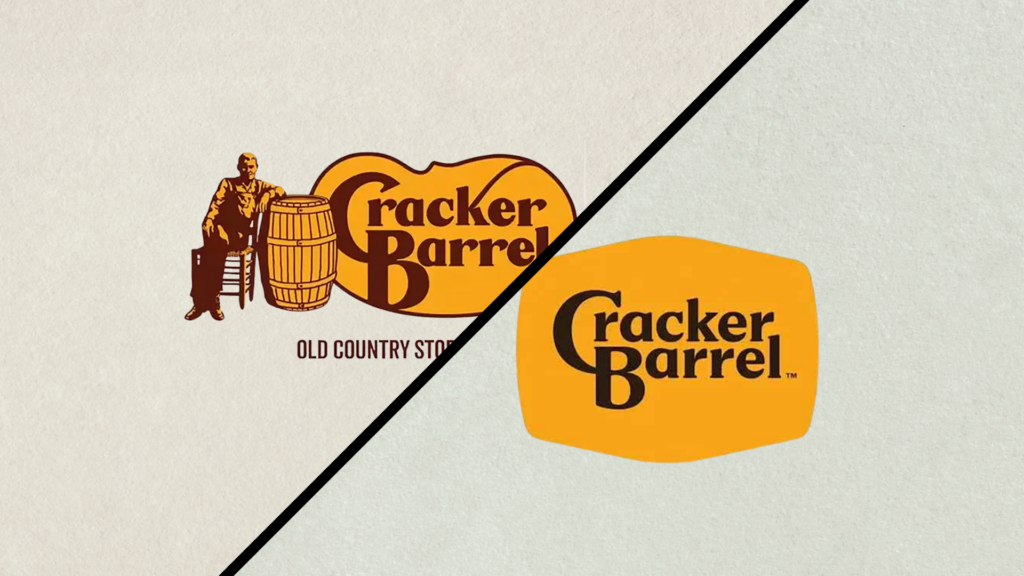
Rebranding Gone Wrong: What Companies Can Learn from the Cracker Barrel Logo Backlash
Public Relations
Posted 23 Apr 2026
A new logo is intended to signal progress. Modernity. Strategic evolution. It marks the next chapter in a brand’s story. But for Cracker Barrel, that very step turned into a full-blown crisis overnight. Instead of excitement, the redesigned look was met with clear rejection, something that became obvious across social media. ‘This looks like every other brand’ and ‘Where is the Cracker Barrel I know?’ were just a couple of the comments. Confusion quickly turned to frustration, and the company responded swiftly by pulling the rebrand.
While this may seem like an overreaction to a simple design update, it is actually a textbook example of how modern brand dynamics work. A logo is never just a design element. It represents reliability, history and emotional connection. When that symbol changes, it sparks discussion and can trigger a sense of lost trust. This is precisely why rebranding is such a critical moment for companies.
A brand is not defined solely by its visual identity, but by the associations and emotions that people have with it. Over time, a stable mental image of a brand is formed, shaped by routines, memories and expectations. A restaurant feels familiar. A product feels dependable. A brand becomes part of everyday life.
When that image changes, it creates a psychological effect that people often underestimate. People tend to react much more strongly to the loss of something familiar than to potential improvements. A modernised logo may be clearer, more contemporary or more strategically sound. However, subjectively, it can feel like losing a trusted friend.
There’s another layer to this. Brands act as social signals. They represent values and lifestyles. Choosing a brand is also a statement about oneself. When that signal changes, it creates uncertainty. Even loyal customers may begin to distance themselves. For companies, this means striking a delicate balance: evolving to stay relevant while retaining the core elements that make the brand recognisable. Rebranding always sits at the intersection of progress and continuity.
One of the most common mistakes when rebranding is to treat it as a design project. Successful brands, however, approach it as a communication process. This distinction is crucial. Design shows the outcome; communication explains the journey and brings people along for the ride.
One effective approach is to present the change as a story. When a brand makes its evolution visible and explains why it is happening, it provides direction and clarity. Behind-the-scenes insights, glimpses into the design process or clear articulation of strategic goals can transform an abrupt shift into a logical progression. A new logo becomes a story that people can follow.
It is equally important to involve the community. Allowing feedback early on or testing initial concepts can reduce the risk of rejection. Providing a sneak peek that invites reactions and takes them seriously can turn critical voices into valuable input. Rather than a one-sided launch, the process becomes a dialogue.
At the same time, visual and conceptual continuity remain essential. Even minor details, such as a familiar colour palette, distinctive visual style or recognisable symbol, can act as anchors. The brand evolves, yet still feels familiar. Achieving this balance is crucial for the success of a rebrand.
Successful rebrands rarely happen on impulse. They are based on clear strategic planning. This includes a thorough analysis of all relevant stakeholders. Internal perspectives are just as important as external expectations. Only by understanding which elements people see as essential to the brand can companies implement changes without undermining trust.
A strong narrative framework is also crucial. Every change must answer two key questions: Why now? What is it that we are intentionally keeping the same? This clarity prevents speculation and reduces uncertainty. Data-driven approaches are also becoming increasingly important. Testing phases, pilot launches and social listening help companies to detect sentiment early and adjust accordingly.
This makes rebranding less of a one-off event and more of a managed, adaptive process. Responsiveness plays a crucial role here. Adjusting based on feedback is not a sign of weakness; rather, it demonstrates a connection with the audience.
The Cracker Barrel case highlights just how sensitive brand identity can be. Even a minor visual change can quickly raise fundamental questions about authenticity and trust. It is not just the design itself that matters, but also how the change is communicated.
Successful rebrands do not feel like a break. They feel like a natural progression, linking the past with the future. This is where strategic communication comes into its own. It translates change into a coherent narrative, providing clarity and strengthening the relationship between brand and audience.
HBI Communication helps companies to approach rebranding holistically and manage it strategically through communication. This ensures that change becomes an opportunity rather than a risk to long-term brand strength. Feel free to reach out to us at vibes@hbi.de.

Communication Advisor at HBI Communication Helga Bailey GmbH
Kilian Schätzke has been supporting HBI in the areas of PR and marketing since 2024.
As a Communication Advisor, his responsibilities include the creation of professional articles and the conceptualization of social media postings.
Furthermore, Kilian is involved in directly assisting our client work.